A more technical catalogue of projects associated with my labors. This includes research projects, presentations, and other works that I have contributed to.
Activities
to
SRI Ant Ecology Project
Through the Science Research Initiative at the University of Utah, I worked as an independent undergraduate researcher on a long-term ant ecology project studying specialist Myrmelachista ants living inside Lauraceae treelets in Costa Rica.
The project focused on an emerging tripartite symbiosis between ants, host plants, and sap-feeding Coccoidea. Unlike many ant-plant systems, these Lauraceae hosts provide limited direct nutritional rewards, so the ants rely on Coccoidea honeydew while nesting inside excavated plant stems. My work examined how colony size, colony composition, and Coccoidea abundance scaled with host plant structure.
I manually counted and organized a dataset totaling 100,081 ants, then developed a population estimation model to infer whole-colony size from sampled branch segments. I implemented the model in Python and used R to analyze colony demographics, generate figures, and test relationships between host size, ant abundance, brood distribution, and Coccoidea populations.
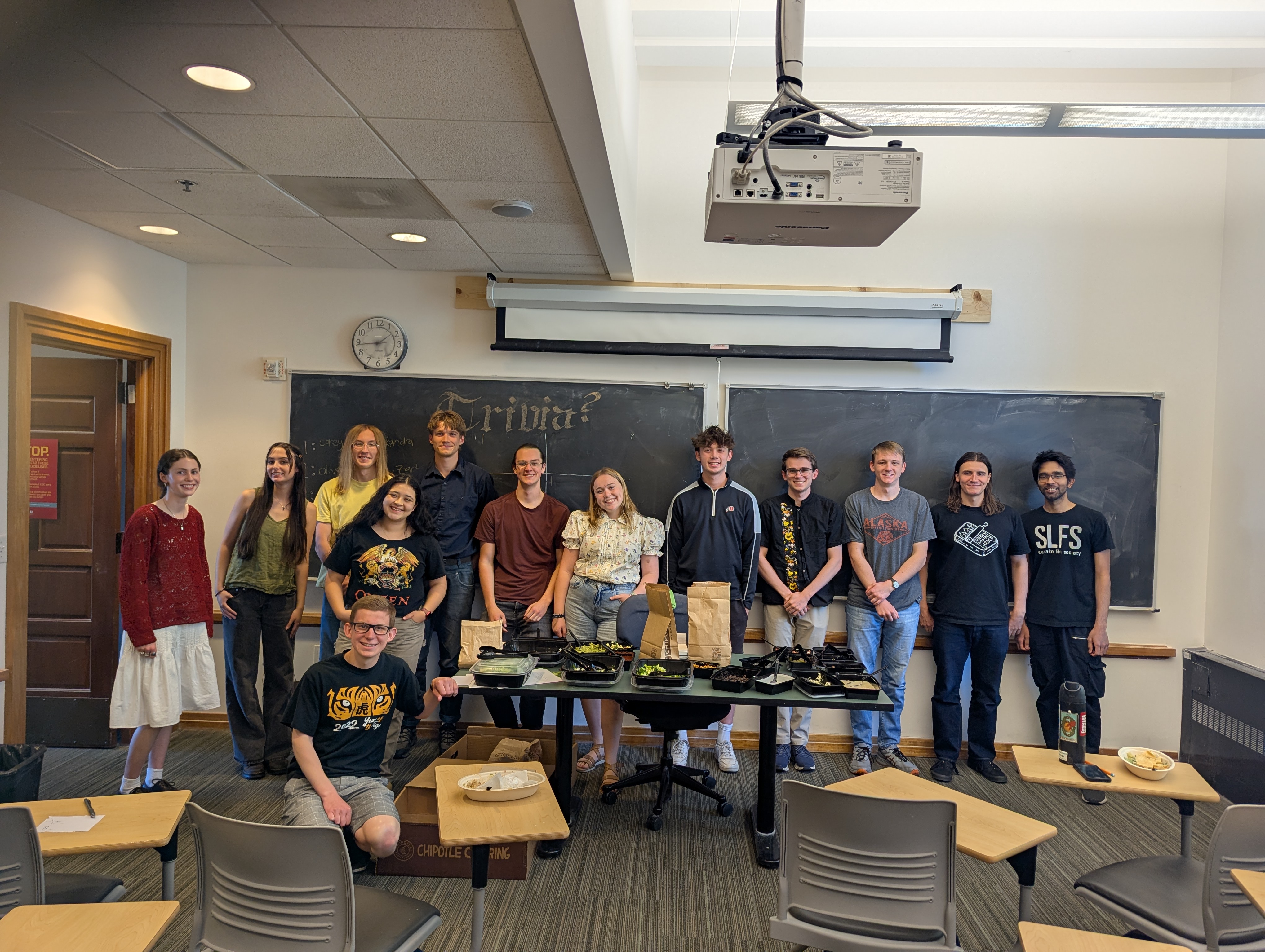
The analysis showed that larger host plants tended to support larger Myrmelachista colonies, that ants were more concentrated in peripheral stem regions, and that colony demographic composition remained relatively stable across host sizes. I presented this work at SACNAS NDiSTEM 2025 annual conference and UCUR 2026 annual conference. The project remains ongoing and has not yet been published.
Conferences: SACNAS NDiSTEM 2025, UCUR 2026
Collaborators
Rodolfo Da Silva Probst, Ph.D., Sylvia Lee
to
Citizen Science DNA Barcoding Project
From September 2024 to June 2026, I worked at the Natural History Museum of Utah as a Science Lead for a citizen science DNA barcoding project in partnership with Cold Spring Harbor Laboratory. The project used DNA barcoding to identify local Utah arthropods while teaching students how molecular biology can contribute to biodiversity research.
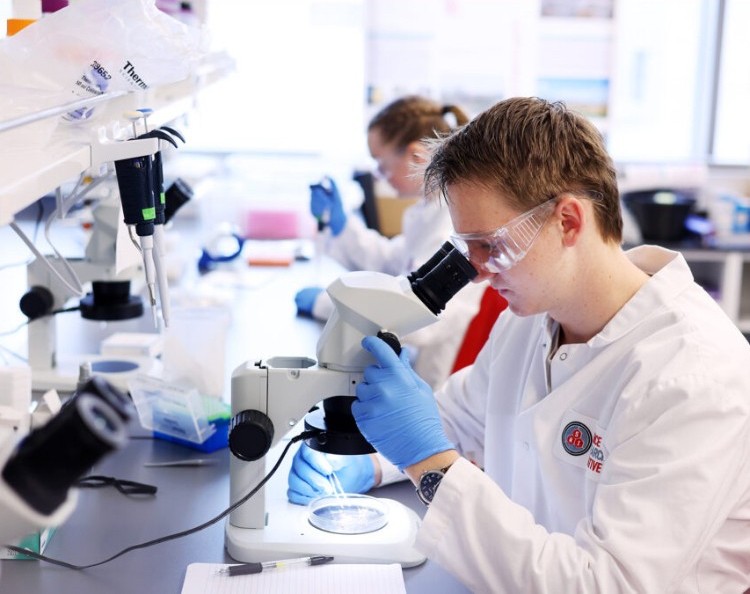
I first mentored a cohort of four high school students through the Youth Teaching Youth program, training them in field collection, specimen handling, Chelex DNA extraction, PCR amplification, and DNA barcoding methods. Our team collected ants, beetles, mosquitoes, and other arthropods, processed the samples in the lab, mailed PCR products for Sanger sequencing, and used the resulting DNA barcodes to identify specimens and submit records to GenBank.
My role later expanded into broader community science outreach. I helped lead a three-hour workshop for the full Youth Teaching Youth cohort of 17 students, a four-hour DNA barcoding presentation and lab activity for a local STEM high school, and an outreach session for a local Girl Scout troop. In these sessions, I explained the significance of DNA barcoding, walked students through the molecular workflow, and led hands-on activities demonstrating specimen preparation, DNA extraction, PCR, sequencing, and database comparison.
This project strengthened my skills in molecular biology, science education, public speaking, mentorship, and experimental troubleshooting. It also gave me experience adapting technical scientific concepts for audiences with different levels of background knowledge.
Presentations: 3 presentations
Collaborators
Ellen Eiriksson, Grant Turley, Claire Deforge, Madi Morgenthau
to
Western Firefly Project
From January 2025 to June 2026, I worked on the Western Firefly DNA Barcoding Project. We helped characterize firefly diversity in Utah and surrounding regions using DNA barcode data. The project focused on generating genetic records for western firefly specimens and comparing them to existing Lampyridae records in GenBank.
After specimens were collected by Christy Bills, we performed Qiagen DNA extractions, prepared samples for sequencing, and sent them to Cold Spring Harbor Laboratory for Sanger sequencing. Once the sequence data was returned, we cleaned and organized the barcode data, performed bioinformatic analysis, and generated a phylogenetic tree of the sampled fireflies.
We analyzed 47 firefly specimens and created a geographic clade map showing how genetic groups separated by region. These results supported the possibility that some western firefly populations are genetically distinct from currently available GenBank records and may require further taxonomic study. The project remains ongoing and unpublished.
Collaborators
Ellen Eiriksson, Christy Bills, Grant Turley
Pre-REU 2025: Crystallographic Restriction
In the 2025 Pre-REU program, I worked with a small team on a project studying the Lorentz group, symmetric bilinear forms, and the geometry of the light cone. The project introduced us to mathematical research through a full-time, proof-based workflow: reading new material, working at the board, testing ideas, failing repeatedly, and refining arguments into a final written solution.
Our work began with symmetric bilinear forms and the matrix groups that preserve them, then specialized to Lorentzian inner products and the Lorentz group O(m,n). We used this framework to study the light cone and its relationship to spacelike, timelike, and lightlike directions in Minkowski spacetime.
This was my first serious exposure to abstract mathematics, and it changed how I thought about math as a tool. The project showed me how algebraic structures can make complicated geometric and physical ideas precise. It also gave me experience working through difficult, open-ended problems in a collaborative research setting.
Collaborators
Kurt Vinhage, Ph.D., Aryaman Maithani, Colin Denis
Edge of Space Academy 2026
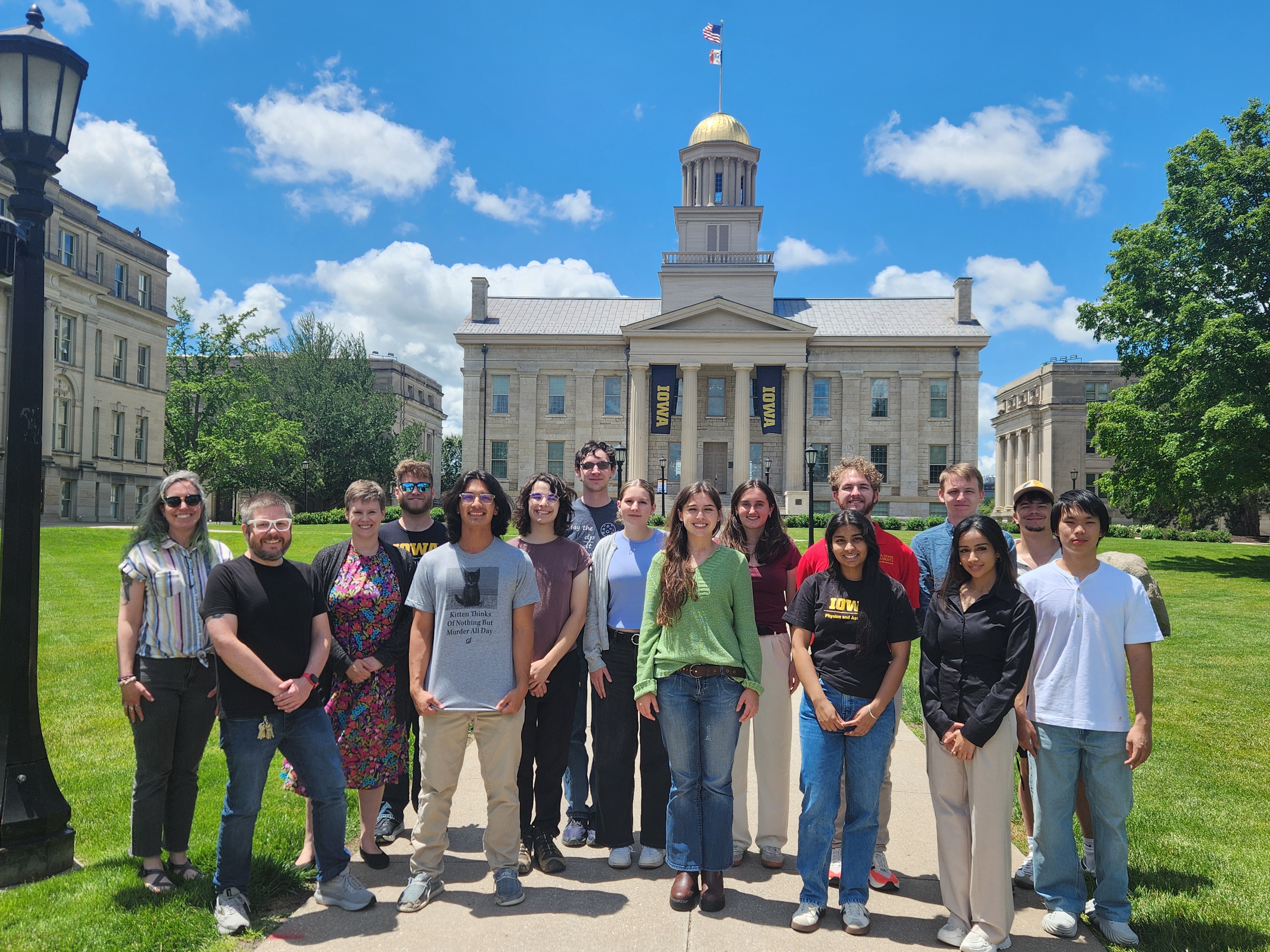
At the University of Iowa’s 2026 Edge of Space Academy, I served as Systems Engineer for Team PRISM (Prairie Remote Imaging and Sensor Mapping). Over the course of a three-week, full-time research program, our team used drone-based remote sensing to study the effects of prescribed burning on Ashton Prairie, an 8-acre native prairie restoration site.
Prescribed burning is an important prairie management technique because it removes accumulated dead biomass, helps control invasive species, returns nutrients to the soil, and mimics the natural fire cycles that shaped prairie ecosystems. Our project compared burned and unburned prairie plots to determine whether prescribed burning was associated with healthier vegetation and greater canopy growth.
To collect our data, we developed a custom payload for a DJI Matrice 300 RTK drone. The payload included an RGB camera for mapping, a spectroscopy sensor for measuring vegetation health, and a LiDAR sensor for estimating plant height. As Systems Engineer, I helped integrate these sensors into the payload, supported field testing and launch operations, and worked to ensure reliable data collection during flight.
After the flight campaign, I contributed to data analysis, focusing primarily on spectroscopy results and vegetation health indicators such as NDVI. Our findings suggested that burned prairie plots exhibited higher NDVI, stronger spectral signs of healthy vegetation, and greater canopy height than unburned plots. We presented these results in an oral presentation to faculty and local high school students.
The project gave me hands-on experience with sensor integration, remote sensing, field operations, and interdisciplinary research. It also provided a realistic introduction to the structure of full-time technical work, from daily problem-solving and hardware troubleshooting to final analysis and presentation.
Collaborators
Susan Meerdink, Ph.D., Adam Skibbe, Ph.D., Allison Jaynes, Ph.D., Dustin Swarm, Ph.D., Emma Shanks, Marcos Garcia, Vinika LNU
Conferences
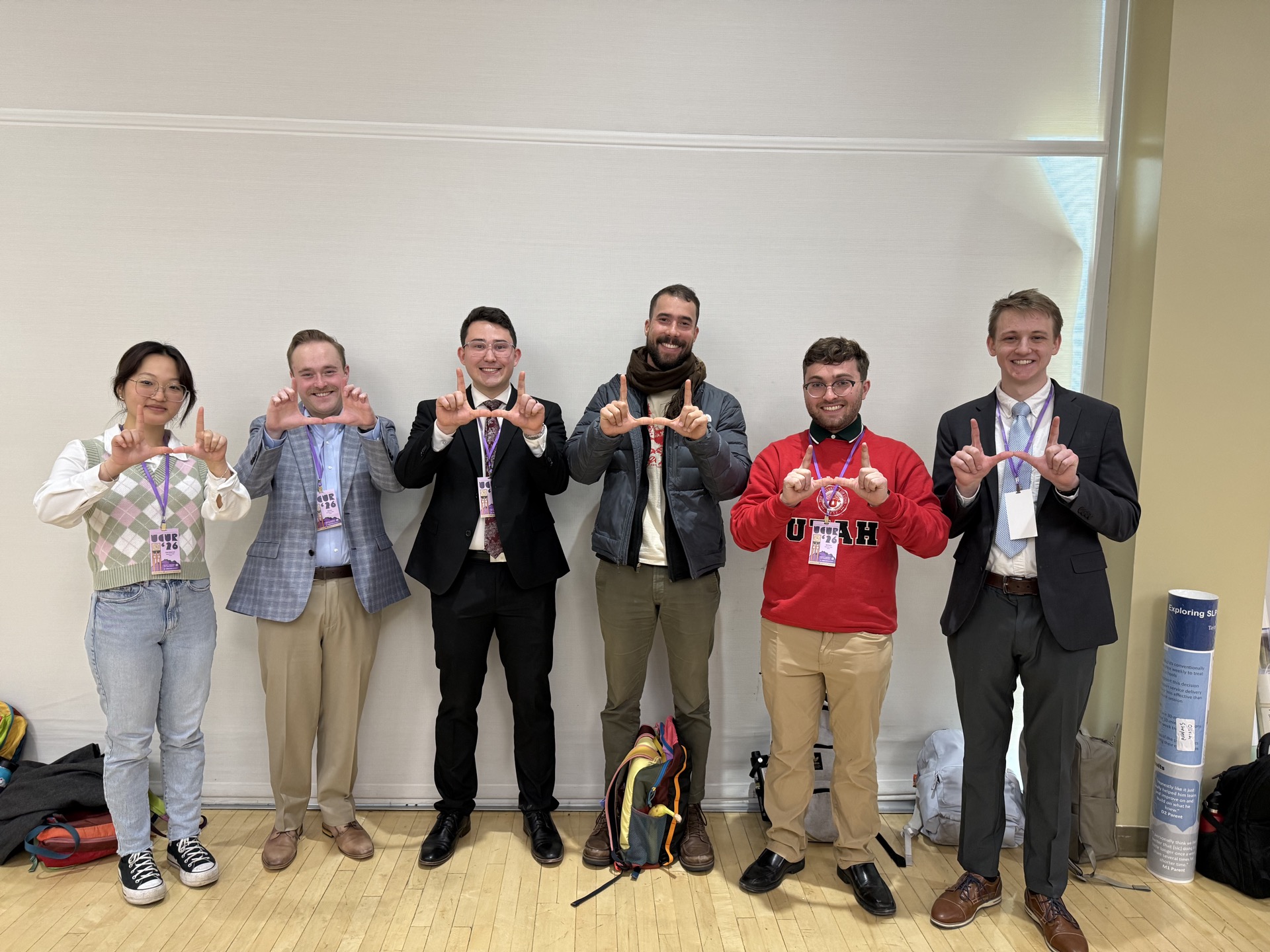
Utah's Conference on Undergraduate Research (UCUR) 2026 Annual Conference
Quantitative analysis and DNA barcode generation for an ant-plant symbiosis project through the
University of Utah Science Research Initiative. I contributed to data counting, analysis, and poster preparation,
and presented the work at conferences.
Quantitative analysis and DNA barcode generation for an ant-plant symbiosis project through the
University of Utah Science Research Initiative. I contributed to data counting, analysis, and poster preparation,
and presented the work at conferences.
Event at the Utah Museum of Natural History. My role was in tabling during the event for both the SRI and for the Citizen Science program.
Collaborators
Ellen Eiriksson
SACNAS NDiSTEM 2024 Annual Conference
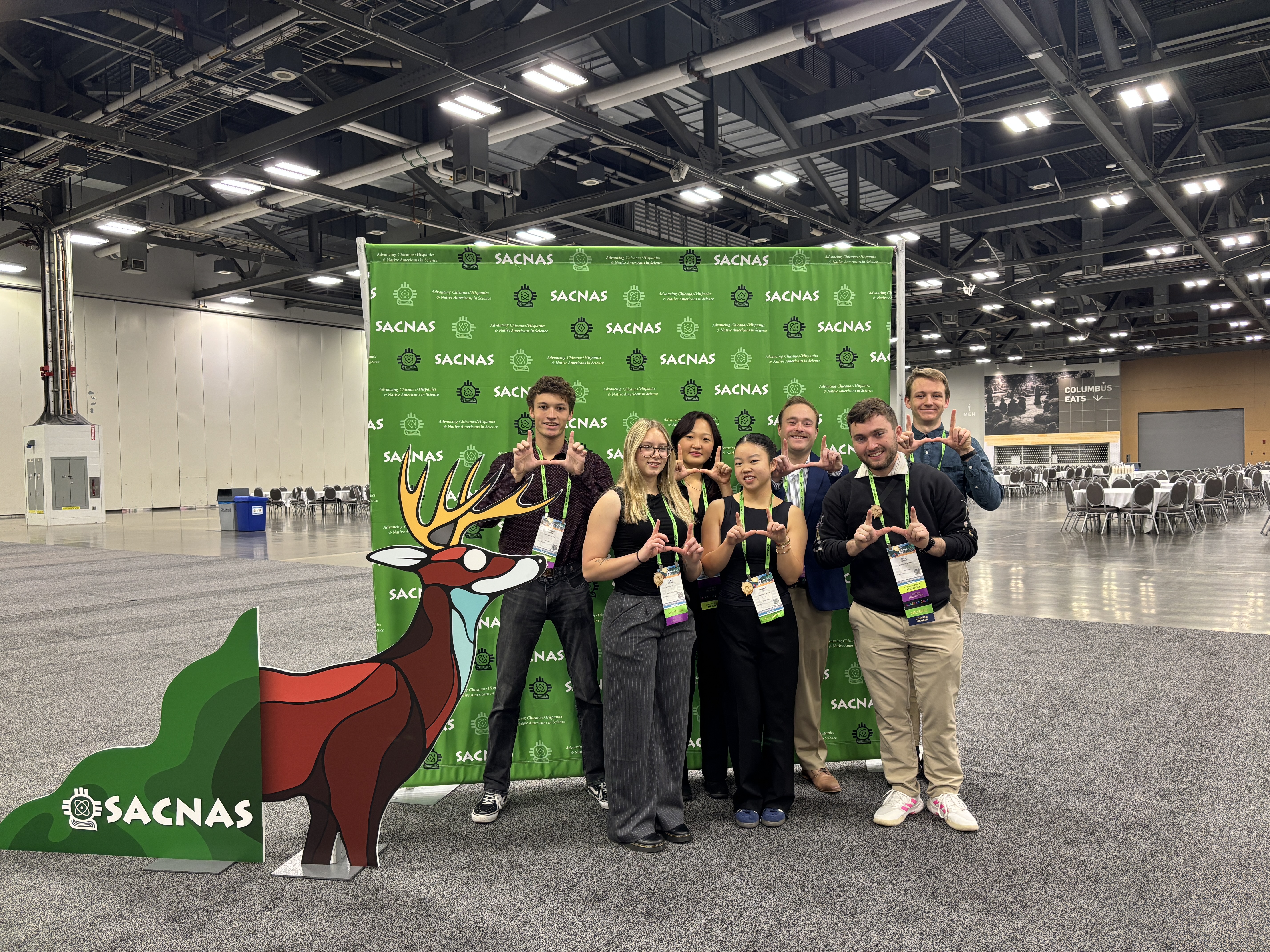
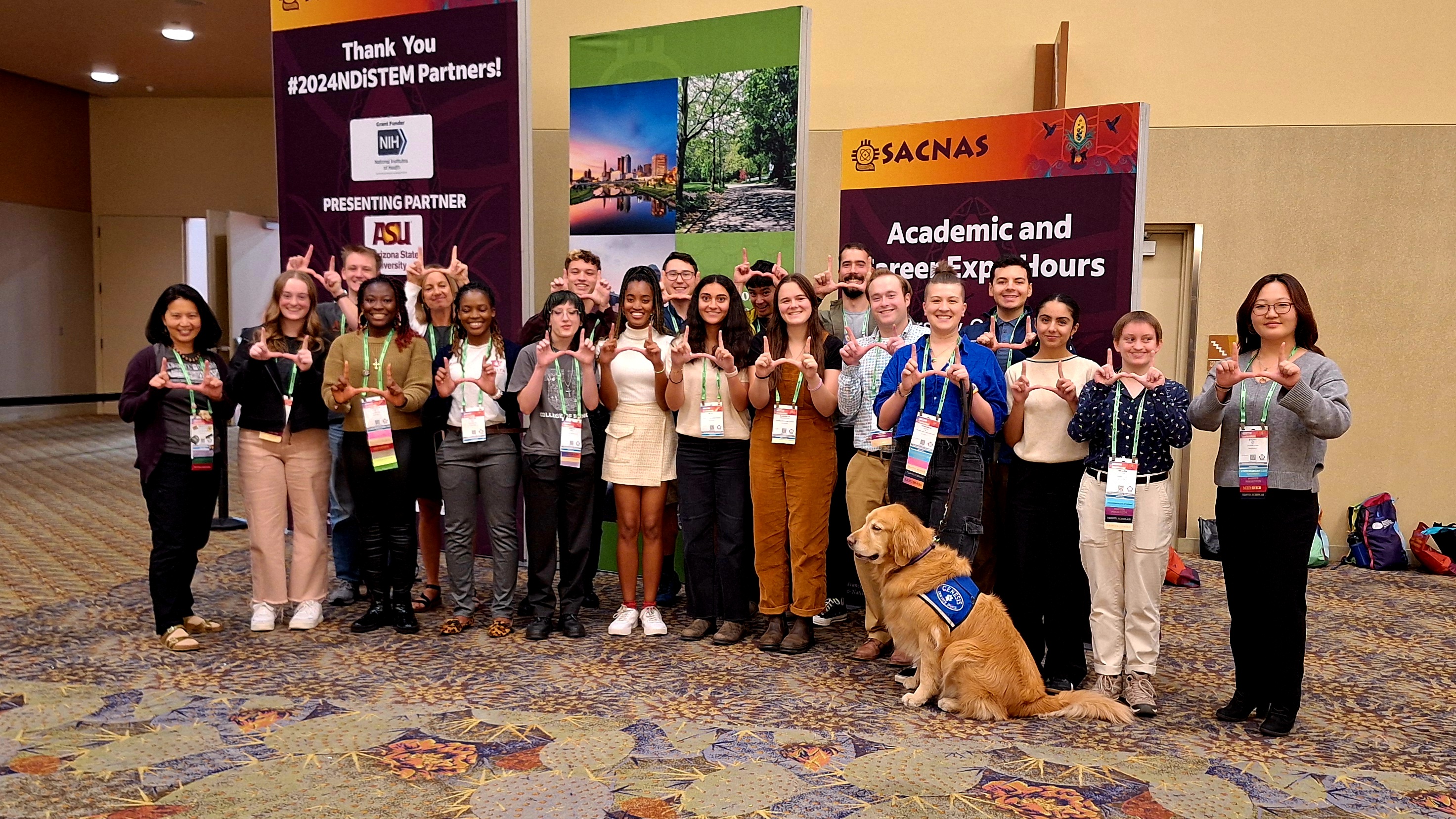
Received the national SACNAS Travel Award to attend the SACNAS NDiSTEM 2024 conference in Phoenix, Arizona. I had the opportunity to attend workshops, meet with other students and professionals in STEM, and learn about the latest research in biomimicry and physics.